
 Events
- This event has passed.
The African University Seminar Series, South Africa (AUSS-SA), was hosted from September 18 to 19, 2025, at the University of the Witwatersrand, in partnership with the University of Johannesburg. Under the theme “South Africa at the Crossroads: Reflections on Inequality, Peacebuilding, Security, and Development,” conveners invited current and former APN and Next Gen fellows based in South Africa to showcase their research and collaborate.
Co-Chairs of the Local Organizing Committee of the AUSS-SA, Ms. Kgomotso Komane (Next Gen 2024 & 2025) and Dr. Anselmo Matusse (Next Gen 2020), welcomed attendees to the inaugural national seminar of the AUSS-SA, highlighting that the event would be a space “to share knowledge, sharpen ideas, and build a community that can pave the way towards conviviality and endurable peacebuilding in the country and beyond.”
Remarks delivered on behalf of Dr. Cyril Obi, Program Director of the APN and Next Gen, expressed his expectation that the seminar would be a highly productive exchange of ideas and would shape the future of building an integrated knowledge community in South Africa.
Welcoming remarks were made by Dr. Ekeminiabasi Eyita-Okon, representative of the Head of the Wits School of Governance, University of Witwatersrand, and Prof. Thulisile Mphambukeli (APN 2018), Head of Department and Associate Professor of Urban and Regional Planning at the University of Johannesburg, who spoke on behalf of Prof. Trynos Gumbo, Head of the School of Civil Engineering and Built Environment at the University of Johannesburg.
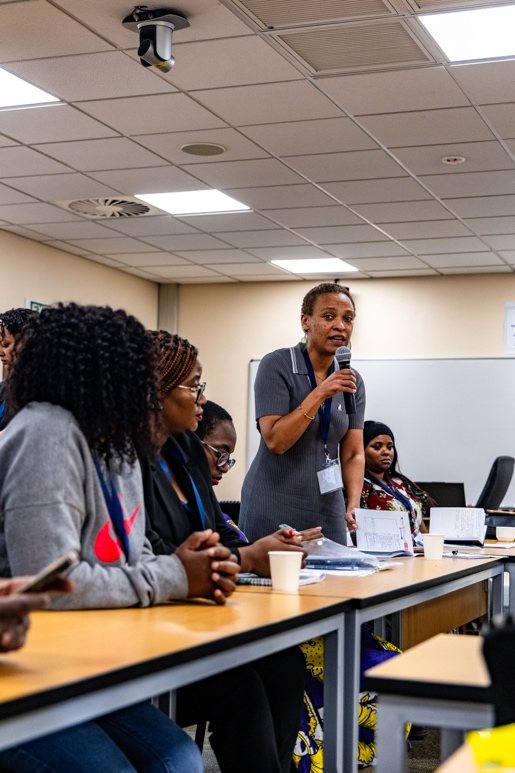 Prof. Shose Kessi, Dean of the Faculty of Humanities and Professor in the Department of Psychology, University of Cape Town, delivered the Day One Keynote Address, “The Role of African University in Advancing Social Justice.” By considering the post-independence geopolitical landscape within which African communities imagine themselves, she argued that Pan-African identity is most often defined and shaped by the nation-state and African elite, rather than by all Africans. She demonstrated how African scholars can utilize participatory action research methods to challenge epistemic violence and mobilize people to contribute to the imagination of the national community. In particular, she presented her utilization of the photovoice method, which involves marginalized community members photographing their communities, discussing their own ideas of unity and solidarity, and embracing Pan-African ideas; thereby, participating in shaping their futures. She concluded that contributing to social justice requires multiple approaches, methodologies, and contributions to institutional building, as well as viewing academia as a potential space of resistance and healing.
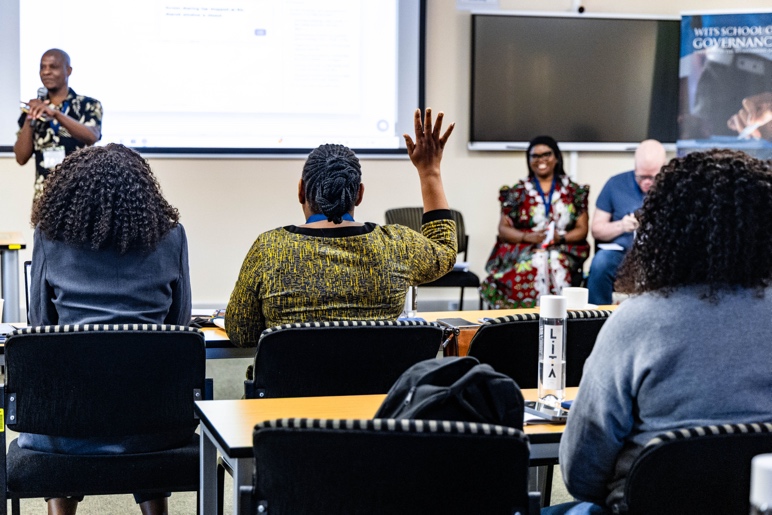 Panel 1, Governance, Violence, and the Criminalised State, was moderated by Dr. Garikai Chaunza (Next Gen 2023). With presentations by Dr. Tapiwa Madimu (APN 2020), Dr. Sisanda Mguzulwa (Next Gen 2016 & 2018), Ms. Kimberley Usher (Next Gen 2019), Mr. Mpumezo Ralo (Next Gen 2019), Dr. Carina Bruwer (Next Gen 2017), and Prof. Anthony C. Diala (Next Gen 2014 & 2015), the panel displayed various gaps within the existing South African government policies related to informal economies in mining and native plant harvesting, community participation in criminal justice systems, and legitimacy and uneven development of healthcare, economies, and security being experienced at the margins. Consequently, these policy and theoretical lapses have furthered the experiences of inequality and precarity for those most vulnerable.
Panel 2, Identity, Belonging, and the Afterlives of Apartheid, included presentations from Dr. Sifiso Ndlovu (Next Gen 2015), Dr. Tamuka Chekero (Next Gen 2019, 2020, & 2021), Mr. Bambo Miti (Next Gen 2022), and Dr. Keneuoe Thibello-Maphosa (Next Gen 2023), and was moderated by Dr. Silindile Mlilo (Next Gen 2024). The panel highlighted diverse experiences of migrant, racial, and gendered identities, their interactions with the state, and the creation of their own places of belonging within communities, including the establishment of their own support networks and involvement in religious spaces, as well as how they contest notions of the state and nationhood in South Africa.
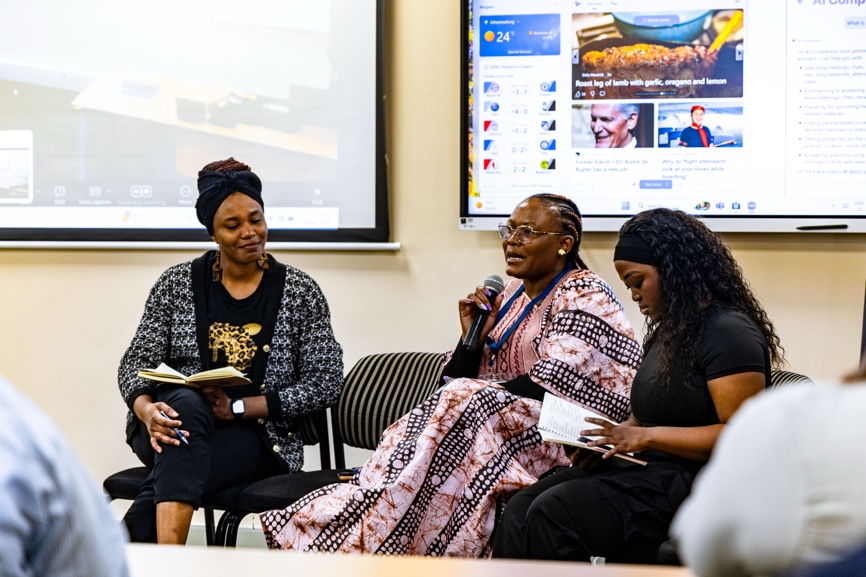 The film “Inkululeko: Queering democracy and inequality in the everyday afterlives of apartheid,” by Prof. Hlengiwe Ndlovu (Next Gen 2016 & 2019 & APN 2025), documents her interviews with people in Duncan Village about how they define and conceptualize Democracy. The documentary and interviews revealed the consequences of post-Apartheid uneven development and reconciliation processes that have not involved African ontologies and epistemologies in the governance systems built in the wake of the Apartheid state: “South Africans didn’t fight for democracy, they fought for Inkululeko, for freedom.”
In Panel 3, Memory, Resistance, and Youth Struggles, presentations were made by Mr. Kagiso Nko (Next Gen 2024), Dr. Stephen Temitope David (Next Gen 2017), Dr. Thatshisiwe Ndlovu (Next Gen 2017, 2021, & 2023 & APN 2024), Ms. Gorata Chengeta (Next Gen 2025), and Ms. Medina Moosa (Next Gen 2023 & 2024). Moderated by Prof. Hlengiwe Ndlovu, the panel focused on recent and historic movements, including online hashtag movements with lasting impact on the experiences of Black students at historically white South African universities, the need to reconsider the carceral strategies to address sexual violence with a feminist abolitionist approach, and the influence of international Mujahadeen movements for their contributions to the South African Apartheid struggle. Additionally, the everyday resistance of work and hustle culture for survival, as well as the unfinished business of Apartheid memory.
To conclude the activities of Day One, a discussion was facilitated in which attendees reflected on how this knowledge community should organize moving forward, as well as on their shared research focus and experiences in academic spaces. While attendees recognized the frustrations and ongoing challenges faced by scholars, there was also an acknowledgement of the gains that have been made, as well as what needs to change further.
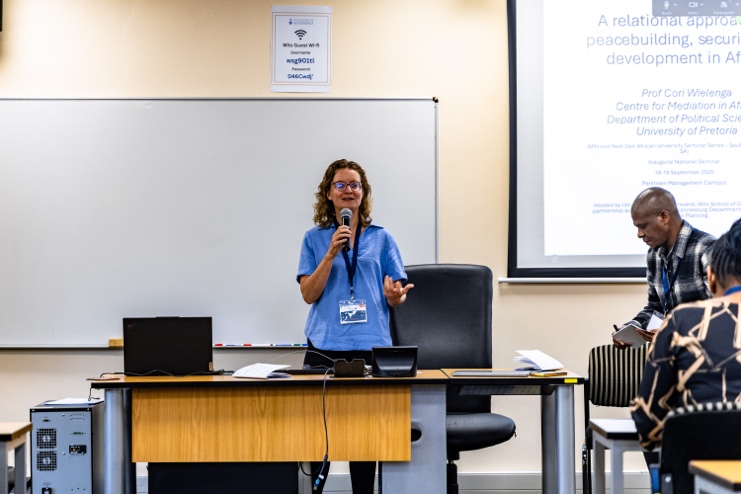 Resuming on Day Two, Prof. Cori Wielenga (APN 2013), Head of Centre for Mediation in Africa and Associate Professor in the Department of Political Science, University of Pretoria, gave the Keynote Address, “A relational approach to peacebuilding, security and development in Africa,” Prof. Wielenga problematized the ongoing and cyclical nature of conflicts addressed through the existing mediation toolkit, recognizing that individuals and communities are not typically taught to mediate conflicts. She argued for the need to radically rethink peace mediation, centering on the critical importance of relationships, to disrupt the current peacebuilding market. To do so, she advocated for the collective political act of resistance through anti-hegemonic and anti-imperial love, which fosters radical self-love, community care, and a commitment to building ethical relations between people and with the land, thereby dismantling oppressive systems and affirming a shared, humanized existence beyond colonial power structures.
Panel 4, Peacebuilding, Traditional Authority, and Religion, moderated by Prof. Thulisile Mphambukeli, included presentations from Mr. Gerald Mandisodza (Next Gen 2023), Ms. Kgomotso Komane, Dr. Tyne Williams (Next Gen 2024), Ms. Pretty Abraham (Next Gen 2025), Dr. Edmore Chitukutuku (Next Gen 2013 & 2015 & APN 2018), and Dr. Garikai Chaunza. The panel of scholars presented cases that highlighted the need for Indigenous knowledge and religion, traditional authority, and women’s leadership in peacebuilding processes, acknowledging where these important facets of African knowledge have been historically excluded from peacebuilding. The panel concluded with an important reflection and a caution to scholars to maintain a “responsibility to understand South African historiography” when conducting work.
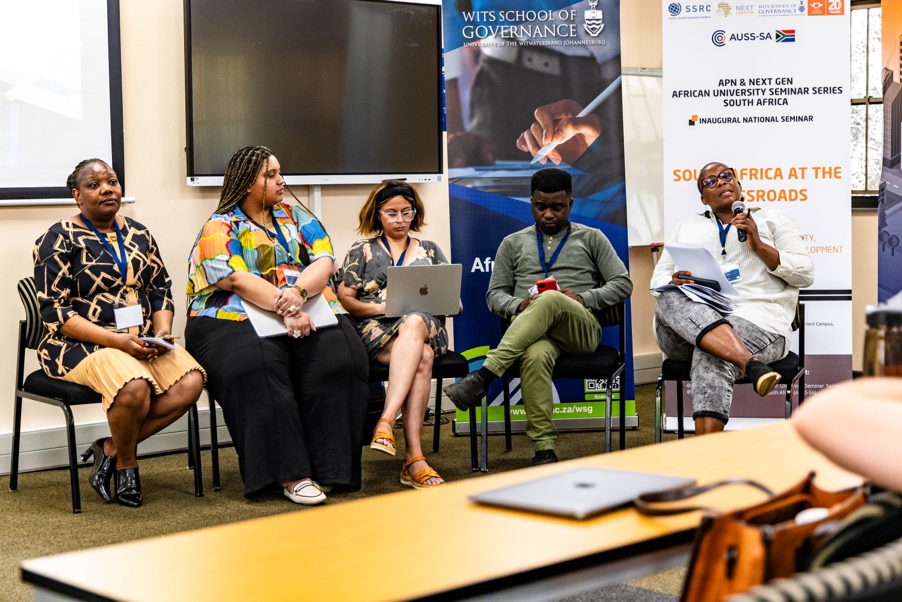 Panel 5, Environmental Justice, Space, and Everyday Violence, was moderated by Dr. Anselmo Matusse, with presentations made by Dr. Margaret Monyani (Next Gen 2017, 2018, & 2019 & APN 2025), Prof. Thulisile Mphambukeli, Mrs. Safiyya Goga (Next Gen 2017), Dr. Samson Faboye (Next Gen 2023), and Ms. Tamia Botes (Next Gen 2024). This final panel encompassed diverse everyday interactions within communities, particularly South African communities in Black townships, those proximate to national borders, or within large urban centers, which take on roles of social ordering and justice from the state by reproducing and contesting migrant communities, crime, or foreign identities. Through various processes, they negotiate the making and remaking of place in the post-Apartheid context of South Africa.
The inaugural AUSS-SA event concluded with messages of gratitude for the attendees, Keynote speakers, Local Organizing Committee, and University administrators. The event was supported by the African Peacebuilding Network and Next Generation Social Sciences and Africa (APN and Next Gen), with funding from the Carnegie Corporation of New York (CCNY).