Fellows & Grantees
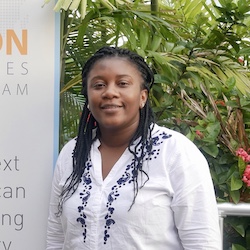
Chenai Matshaka
Political Sciences, University of Pretoria (at time of award)
About
Chenai Matshaka is a PhD student at the University of Pretoria in South Africa. She has worked in the human rights field in Zimbabwe and South Africa focusing on organized violence, torture, political violence, as well as migrant and refugee rights. Her research interests include transitional justice, memory, and conflict as well as tradition-based systems of justice.
SSRC Awards
-
2019
Doctoral Dissertation Research FellowshipCivil society narratives of violence and the shaping of the transitional justice agenda in Zimbabwe (2000-2013).
University of Pretoria, Political Sciences
Project description
In the absence of decisive state leadership in dealing with issues of transitional justice following periods of conflict and violence, civil society often becomes the unofficial driver of such processes. This has been the case in the Zimbabwean context, particularly between the years 2000-2013, a period which saw a recurring trend of violent elections. This period also saw a shift in the role and character of civil society in the country, particularly in relation to those working in the field of human rights and democratisation. These changes have shaped the narratives of political violence in the country and informed the processes these Civil Society Organisations (CSOs) engage in to deal with the aftermath of violence. While the contribution of civil society actors in the field of transitional justice has largely been portrayed in the literature as being positive, little research has been done to question this position. The proposed research seeks to interrogate how civil society in Zimbabwe has shaped the transitional justice agenda in the country through narratives of political violence and how this has impacted on the broader goals of transitional justice. This research uses a qualitative interpretivist approach to understand the kinds of narratives of violence espoused by CSOs, specifically through interrogating this in four Zimbabwean CSOs through a categorical content analysis of their reports and in-depth interviews with key stakeholders.
-
2017
Doctoral Dissertation Proposal FellowshipTruth telling, memorialisation and the role of civil society in the shaping of narratives on the 2008 electoral violence in Zimbabwe.
University of Pretoria, Political Sciences
Project description
In the absence of decisive state leadership in dealing with issues of transitional justice following periods of conflict and violence, civil society often becomes the un-official driver of such processes. This has been the case in the context of Zimbabwe following the 2008 electoral violence. Without a clear road map on the implementation of state developed mechanisms such as the Organ on National Healing Reconciliation and Integration (ONHRI) and later the National Peace and Reconciliation Commission (NPRC), civil society took on various roles to fill this gap including the implementation of un-official truth projects and un-official memorialisation. While the role being played by civil society organizations in filling this gap left by the state is extremely important, it is imperative to interrogate whether these processes of civil society actually contribute to or take away from any specific or broader goals of transitional justice. This is in light of the argument put forward by Posner (2004:237) who argues that civil society "…can be filled with groups that foster cooperation and improve people's lives, or with groups that sow distrust and foment violence." Civil society has the power to influence and shape society, hence the importance of interrogating civil society's role and participation in matters that have the potential to influence the sustainability of peace.