
 Events
- This event has passed.
August 17 – 20, 2026
The Social Science Research Council’s (SSRC) African Peacebuilding and Developmental Dynamics (APDD) Program held its 2026 Research Methods Workshop in collaboration with Itumò Institute, in Porto-Novo, Bénin, from August 17 to 20, 2026. The Research Methods Workshop is an annual training workshop designed to help fellows refine their proposals and research designs before conducting their fieldwork and developing their doctoral dissertations and research projects. Twenty-seven (27) APDD fellows from ten (10) African countries, along with senior scholars, skilled facilitators, guests of honor, and keynote speakers, were engaged for four days that involved presenting and receiving feedback on their presentations, meaningful intellectual exchanges, collaboration, and mentorship from highly experienced senior academics.
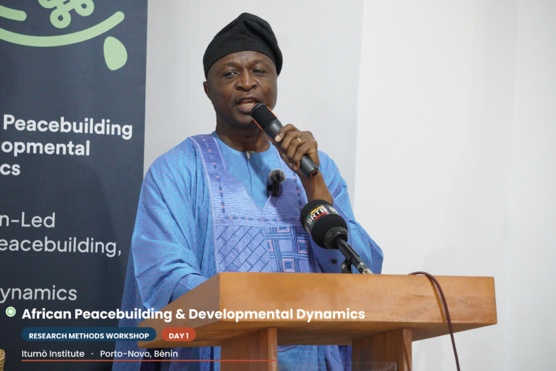 The workshop’s opening remarks were delivered by Dr. Moudjib Djinadou, Executive Director and Founder of Itumò Institute and Chair of the Itumò Institute Local Organizing Committee (LOC). He warmly welcomed all the guests and expressed his gratitude for their presence in Porto-Novo. Dr. Djinadou then explained the significance of hosting the workshop in Porto-Novo, a city with a rich and distinctive history, noting that the city is unique in being known by three official names, reflecting the city’s diverse historical and cultural heritage.
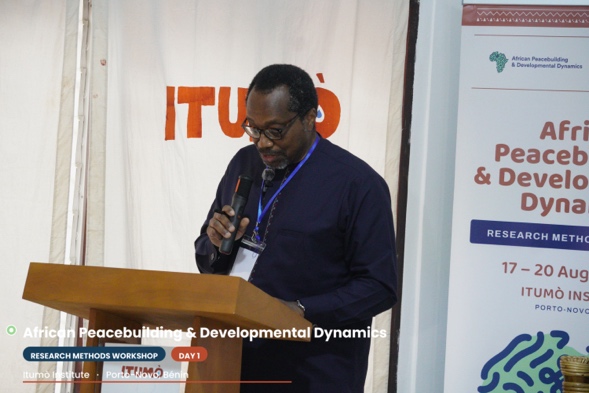 Dr. Cyril Obi, Program Director of the APDD program, followed with his remarks. He welcomed the 2026 cohort of fellows, noting that they were selected from hundreds of applications and are joining a growing scholarly community that has received 840 fellowship awards since 2012. Dr. Obi celebrated the positive trend in gender representation across the fellowship cohorts, observing that more women than men are now receiving fellowship awards. He highlighted Itumò Institute’s commitment to fostering Afrocentric research, dialogue, and knowledge production by African scholars, while noting the significance of holding the workshop in Benin, a country that played a key role in the history of democratic transitions on the continent. He encouraged the fellows to take ownership of their research and use the workshop to refine their research designs and build strategic collaborative connections with their peers and mentors.
Drawing on his experience as a practitioner working with African Union (AU) and the Economic Community of West African States (ECOWAS) member states on peace and security-related issues, His Excellency Ambassador Amadou Diongue—ECOWAS Resident Representative to Bénin—addressed the audience next. He emphasized the rapidly changing international order, particularly developments in the Sahel and the evolving relationship between the Economic Community of West African States (ECOWAS) and the AU. Noting that the continent already has the legal and institutional architecture to address the changing geopolitical landscape, he argued for greater creativity in making these instruments more effective in ensuring that African-led solutions remain at the center of international responses.
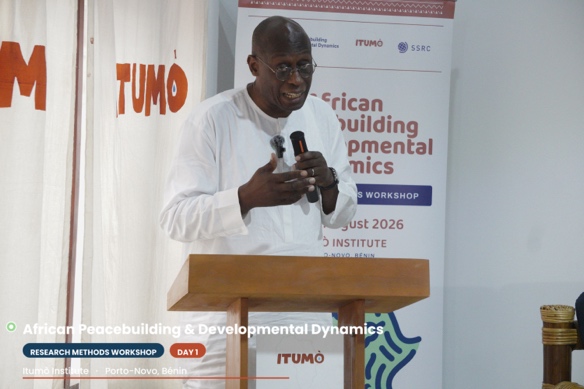 Mr. Raouf Mazou, Assistant High Commissioner for Operations at the United Nations Human High Commissioner for Refugees (UNHCR), identified a deep challenge facing Africa: the lack of elite consensus around institutions and the social contract that enables societies to hold together and prosper. Mr. Mazou explained the importance of elite consensus in ensuring cohesion and progress within the political and economic spheres, arguing that this would allow for opposing views to engage and find common ground on matters of critical national importance, and should be viewed as a broad condition for societal development. He encouraged the fellows to include the idea of elite consensus into an aspect of their research agenda, by examining how it breaks down and how it can be rebuilt through stronger institutions.
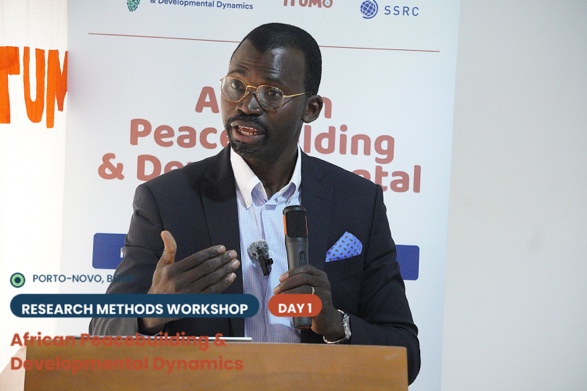 The opening session of the first day was followed by the keynote lecture titled “Reflections on Methodological Issues in Conducting Evidence-Based Research for Shaping Policy in a Changing World: A Perspective from Africa,” delivered by Professor Delidji Eric Degila, Professor of Practice of International Relations, Department of Political Science and International Relations, Geneva Graduate Institute. Prof. Degila emphasized the importance of context, methodological diversity, and conceptual decolonization in African research. He urged scholars to move beyond stereotypes and conventional frameworks, recognizing Africa’s diverse histories, lived realities, indigenous knowledge systems, and contributions to global knowledge production. He highlighted approaches such as dialectical and symptomatic reading, as well as eclecticism, to encourage scholars to examine multiple perspectives and uncover assumptions and gaps in existing analyses.
A Q&A session followed the keynote presentation, after which fellows and their assigned facilitators convened for small working group sessions, where discussions on research methodology, frameworks, and thematic issues began.
The second day of the workshop was ushered in by Dr. Moudjib Djinadou and Ms. Angeline Nguedjeu, members of Itumò Institute’s LOC. They contextualized the day’s upcoming proceedings, beginning with a presentation and a roundtable discussion organized around the Institute’s observatories: a framework for methodical review, designed to shed light on issues that shape the continent’s trajectory.
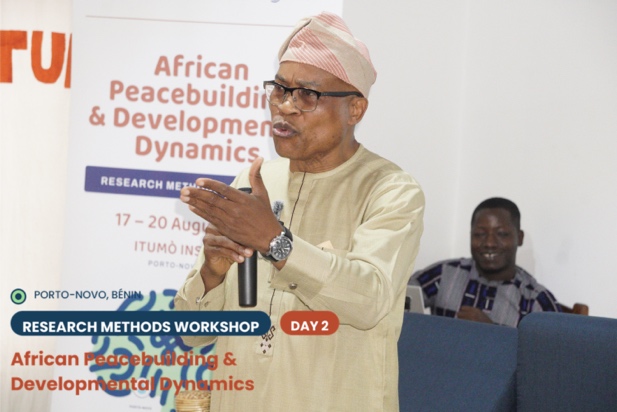 Professor Ambassador Ajibewa Aderemi, Principal Consultant and Co-Director of Bonafide Global Concept Ltd, Nigeria, and a former Director of Political Affairs at the Economic Community of West African States (ECOWAS) Commission, made the first presentation at the Itumo Institute’s Roundtable on the theme, “African Progress is Africa’s Responsibility. Drawing on his practical experience at the ECOWAS Commission, he emphasized that research and policy briefs should be understood as acts of nation-building, while noting the persistent gap between researchers, who are rewarded for depth and caution, and policymakers, who must prioritize speed and action. He stressed the importance of locally grounded, evidence-based research for effective governance and encouraged fellows to continue to write despite the challenges surrounding research funding and publication.
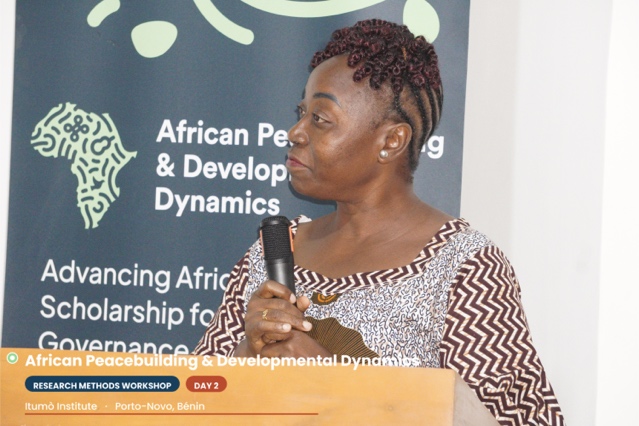 This was followed by presentations by researchers based at Itumò Institute. They highlighted the current activities and accomplishments of Itumo’s research thematic observatories, including the West African single currency, African name usage, textile sovereignty, diaspora dollars, and the nexus between insecurity, education, and governance. The presentation on the single currency traced efforts to create it back to the establishment of ECOWAS in the 1970s and emphasized the importance of monitoring macroeconomic convergence and economic coordination, while that on the African name initiative was described as part of ongoing efforts to help Africans rediscover and reclaim the richness and meaning of African names through research, databases, and legal analysis. The roundtable researchers also connected the work of these observatories s to the African Union’s Agenda 2063, which envisions an integrated, prosperous, and peaceful Africa driven by its citizens, and highlights the importance of diaspora capital in strengthening Africa’s financial independence.
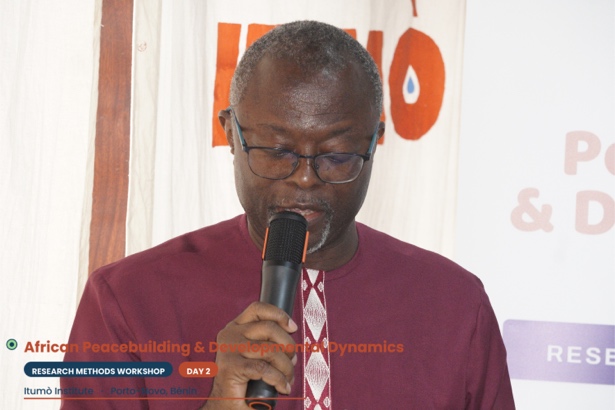 The next presentation, “The Myth of African Kings’ Consent to the Slave Trade (The Case of the Kingdom of Dahomey)” was delivered by Dr. Dieudonné Gnammakou, lecturer and researcher at the Department of History and Archaeology,Université d’Abomey-Calavi. Underpinning Dr. Gnammakou’s lecture was his interrogation of a central fallacy underpinning the role of Africans in the trans-Atlantic slave trade by posing the following question: “Who wrote the history of the slave trade within the context of economics and a contract, as opposed to referring to it as a crime?” Describing enslavement primarily as a form of “trade,” he argued, obscured coercion and violence with an underlying assumption of negotiated exchange between equal partners. He emphasized the role of this narrative in overemphasizing African complicity while minimizing the role of European slave raiders. Dr. Gnammakou made use of the Kingdom of Dahomey as a case study, drawing on seven documented strategies employed by European shipowners and slave-raiders to examine how enslavement was organized and sustained, including the use of militias and mercenaries.
Day two of the workshop concluded with fellows and their facilitators reconvening in assigned groups for their working group sessions.
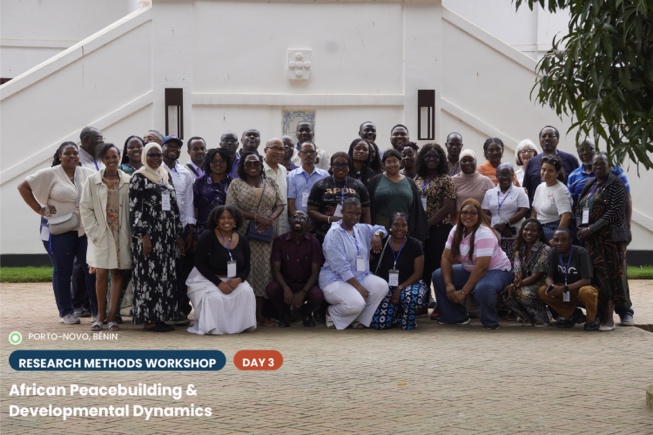 On the third day, Wednesday, fellows and facilitators proceeded with their morning working group sessions, which were followed by afternoon one-on-one sessions. During these sessions, fellows were provided specific feedback and guidance from their facilitators on their proposals and draft dissertation chapters. The day culminated in a visit to cultural and historical sites in Ouidah, Porto- Novo, and Cotonou. These sites included the Python Temple (a Vodun site of veneration housing royal pythons), the Door of No Return (a memorial gateway commemorating the horrors of the transatlantic slave trade), the International Museum for the Memory of Slavery (a former Portuguese Fort contemplating the history of slavery and transatlantic deportation that affected Benin), and the Amazon Monument (a national symbol celebrating the strength, courage, and legacy of the Dahomey women warriors). In the evening, a welcome dinner was attended by all workshop participants.
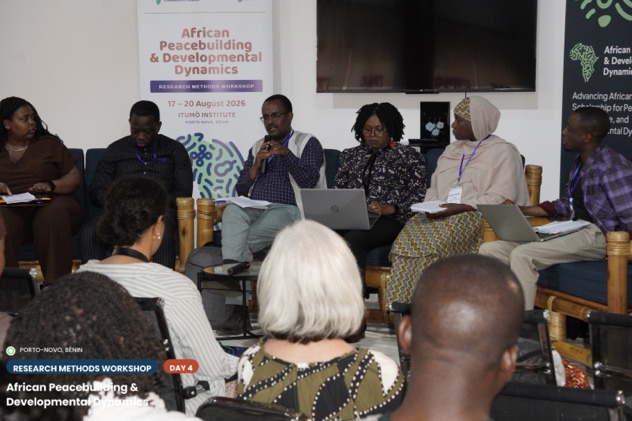 The last and fourth day of the workshop, Thursday, commenced with the continuation of one-on-one sessions, followed by the APDD fellows’ panel discussion on “Aligning Research Methods with Budgeting for Fieldwork in African Peacebuilding,” moderated by Dr. Cyril Obi. The panelists included Dr. Amogne Asfaw Eshetu (IRF 2026), Dr. Zainab Nuhu (IRF 2026), Nomphumelelo Queen Babeli (2026 Doctoral Completion), Michael Fajobi (2026 Doctoral Proposal), Dr. Nelson Oppong, from the University of Edinburgh, United Kingdom, and Dr. Henrietta Nyamnjoh, from the University of Cape Town, South Africa. The panelists’ directive was to reflect on the elements they consider when developing their research budgets for fieldwork, as well as speak to the cost-saving strategies they rely on when facing funding constraints.
Questions were posed by participants regarding strategies and options for mitigating the need to document expenses in rural communities and addressing inducement requests from research participants. Panelists advised participants to carry a receipt booklet with them as they conduct their fieldwork, while suggesting the use of non-monetary approaches for the inducement of research participants throughout fieldwork.
Following the panel’s conclusion and brief remarks by Dr. Djinadou and Dr. Obi, the workshop proceedings were closed with the awarding of certificates of participation to APDD fellows, facilitators, and members of the Itumo Team by the special guest of honor, Mr. Raouf Mazou.