
 Events
- This event has passed.
Abidjan, Côte d’Ivoire
The Social Science Research Council’s (SSRC) African Peacebuilding and Developmental Dynamics (APDD), in collaboration with the Centre for Research and Action for Peace (CERAP)/Jesuit University Abidjan, held the 2026 Writing and Dissemination Workshop in Abidjan, Côte d’Ivoire, from February 9 to February 12, 2026. The workshop brought together forty-five (45) fellows from nine (9) African countries, along with facilitators, guests of honor, and keynote speakers, for four days of refining draft dissertation proposals, chapters, and manuscripts based on program-supported research findings, while engaging in peer-to-peer discussions, networking, and mentorship from highly experienced facilitators.
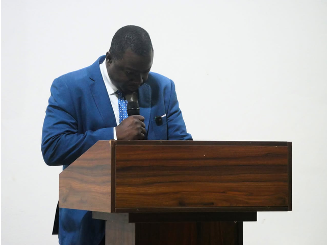 On February 9th, the first day, the workshop commenced with an introductory statement by Dr. Arsène Brice Bado, the Director of the Centre de Recherche et d’Action pour la Paix (CERAP), who welcomed everyone to Abidjan and CERAP. Dr. Bado emphasized that Abidjan is a fitting and meaningful setting for the workshop, as CERAP engages many of the realities being studied across the continent. He also highlighted the importance of the APDD program for African scholars, who, he noted, “must be central producers of knowledge about Africa: theoretically grounded, empirically rich, and ethically engaged.”
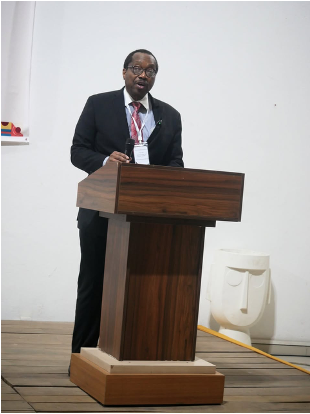 Dr. Cyril Obi, Program Director of the SSRC’s African Peacebuilding and Developmental Dynamics (APDD), in his opening remarks expressed gratitude to all participants. Dr. Obi highlighted the significance of the Social Science Research Council’s ability to nurture generations of scholars across the world. He also thanked the APDD program’s funder, the Carnegie Corporation of New York. Dr. Obi celebrated the partnership with CERAP, which he noted, is groundbreaking because it marks the first time in recent years that a regional center of excellence in francophone Africa is hosting an APDD workshop. Finally, Dr. Obi reaffirmed that African scholars must “give back” to Africa during these turbulent times.
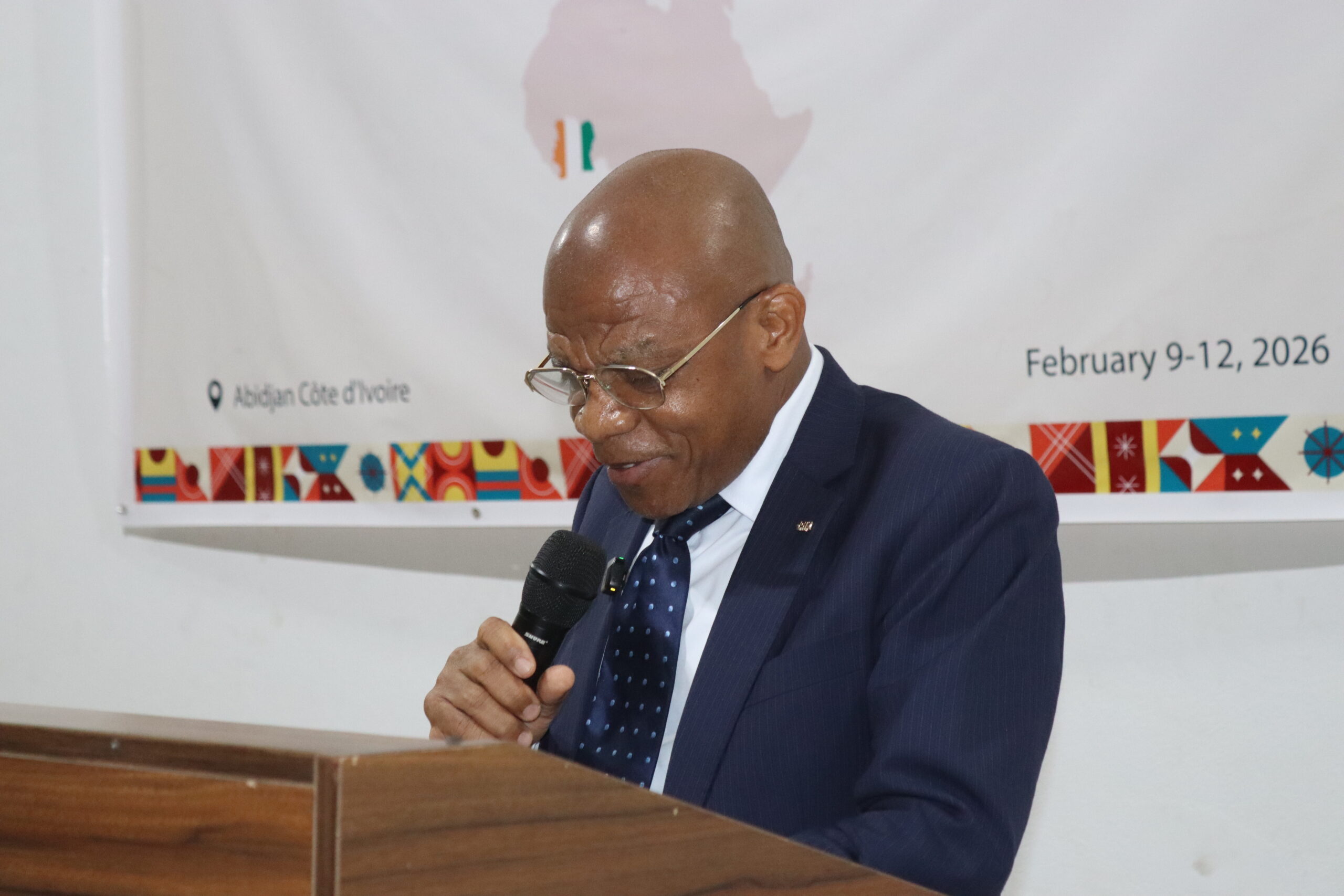 Guest of Honor Mr. Adama Coulibaly (representing N’Guessan Koffi, the Minister of National Education, Literacy, and Technical Training) thanked Dr. Arsène Brice Bado for the invitation and commended the SSRC and CERAP for supporting African researchers, for holding the Writing and Dissemination Workshop in Côte d’Ivoire. He also encouraged participants to use their research at the service of peace. Research, he stressed, is expected by educational institutions, local authorities, and communities to strengthen social cohesion and support inclusive development.
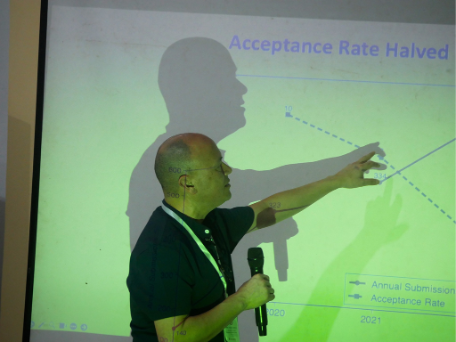 Prof. Leonardo Arriola, from the University of California, Merced, presented the first Keynote Lecture, “The Politics of Writing and the Writing of Politics: Making Research on African Peace and Governance Matter.” His PowerPoint presentation highlighted that a barrier to stronger African scholarly publications on peace and governance is how high the Annual Submission Rate is compared to the Acceptance Rate. There is also a lack of structure and thought put into manuscripts, given that journals and programs are already oversaturated with them. Due to this oversaturation, applications often need to stand out. He stated how often manuscripts are rejected for weak writing and arguments, not for a lack of relevant data or theory; thus, some genuinely good ideas never travel. Drawing from his experience as a journal editor, he explained that many strong manuscripts submitted for consideration for publication are sometimes rejected because the arguments were unclear, particularly in cases where the theory is already implicit, and the evidence is not connected to claims. In his words, “clarity is not neutrality.”
The keynote plenary session was followed by working group sessions where APDD Individual Research and Doctoral Dissertation fellows engaged with their mentors and peers, presented their draft manuscripts/chapters, and received feedback. The day concluded with everyone returning to the hotel.
With the launch day being a success, we interviewed Daniel Lifuka Sichinga (Research 2025, University of Cape Town) on how his research has evolved since the 2025 Research Methods Workshop.
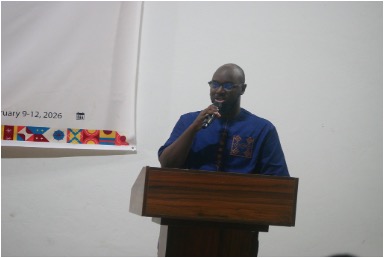 On February 10, the second day, Opening Remarks were made by Jean Marc Hovi, the National Coordinator of WANEP. He welcomed everyone to the workshop, stating it is an honour to speak to those bringing together peace and democracy to the African continent. He encouraged researchers to hone their understanding of the social and political realities of modern-day democracy in Africa, so they can truly support it. This, he stressed, will strengthen citizens’ trust in institutions.
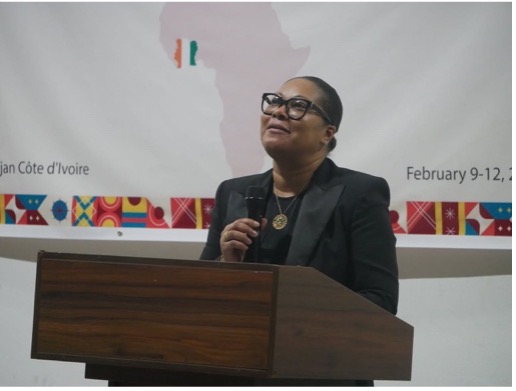 Remarks were also made by Madame Malékah MOURAD-CONDE, the Director General of Côte d’Ivoire Tourisme, who stated her joy at seeing many new visitors to the special city of Abidjan. She expressed hope that the intersection of research and peace would continue to be realized among the fellows, and that this workshop happening in Abidjan, with CERAP, is particularly meaningful due to their own focus on peacebuilding research.
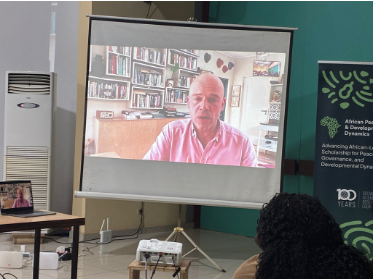 The second Keynote Lecture, “AI and Transformative Indigenous Knowledge: Global Disruptions, Africa and the Challenge of Reimagining a Better World,” was delivered by Prof. Iginio Gagliardone from the University of the Witwatersrand, South Africa. He argued that Africa’s “digital moment” should not just be about technological advancement, but should question who defines, governs, and enforces power, sovereignty, and knowledge in the digital age. Prof. Gagliardone argued that “Africa is not a passive recipient on the stage of global tech,” but “an active participant who can create an alternative vision of digital governance.? He also pushed back against the narrative that “Africa lacks an X factor.”
The lively Q&A session engaged largely with questions around ethical dilemmas surrounding AI, and how the continent can take ownership of technological advances while relying less on Western output. Afterward, the keynote was followed by the workshop group sessions.
On February 11th, the third day of the workshop, fellows continued with their working group sessions in the morning. Following the completion of the mentorship one-on-one sessions, fellows visited historical and cultural sites in Grand Bassam, a town near Abidjan. Other notable sites visited included the National Costume Museum, Grand Bassam Beach, and some local markets in Abidjan. The day ended with a welcome dinner for all participants in Abidjan.
On February 12th, the final day of the workshop, six fellows engaged in a panel discussion, “Research-Based Writing in the Age of Artificial Intelligence (AI): Perspectives Toward an Ethical Framework for African Peacebuilding Scholarship,” moderated by Dr. Cyril Obi. The panel explored both the possibilities and contradictions embedded in the central question: Is it possible to use AI effectively in African peacebuilding scholarship?
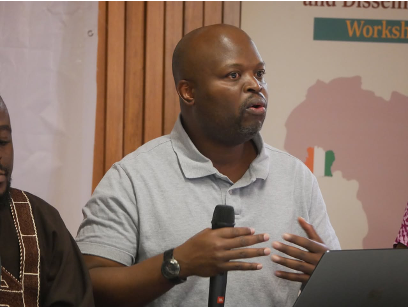 Prof. George Karekwaivanane, from the University of Edinburgh, Scotland, opened with a reflection on the limits of AI for academic growth. Drawing from experience as a professor and mentor, he argued that AI is not a substitute for originality and critical thought. However, he recommended that AI be used to save time on some research-related activities for those getting their Master’s or PhDs.
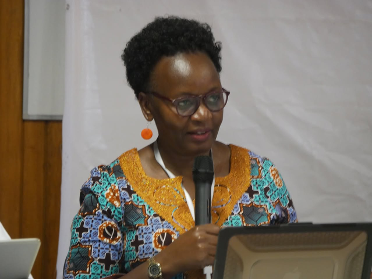 Dr. Pamela Khanakwa, from Makerere University, Uganda, reiterated the risk of AI compromising or erasing an academic’s unique voice. She noted that when reading dissertations, she could tell where AI was used because she could tell where two different voices appeared in the writing. She advocated for researchers to take ownership of their work. “If AI doesn’t allow us to grow our own voices as scholars, then what are we doing?”
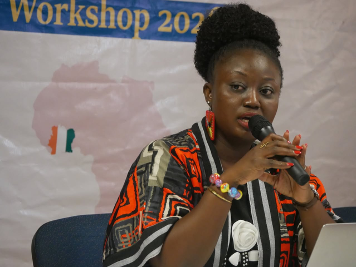 Eugenia Anderson (IRF 2025), from the Kwame Nkrumah University of Science and Technology, Ghana, reflected on how AI can be used to exacerbate existing tensions between disparate groups. She advised against wrongly using AI, and to deeply consider “the ways we can use it correctly. ”
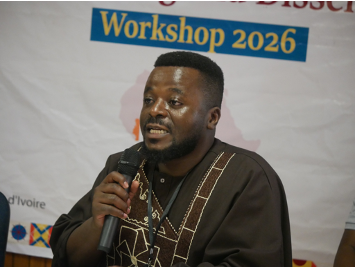 Dr. Dickson Okello (IRF 2025) from Egerton University, Kenya, spoke on issues related to ethics and transparency about AI use in writing for journals. He challenged the audience to consider how to ethically use AI as African researchers, as AI can be a useful tool for building their capacity for efficiently producing high quality writing.
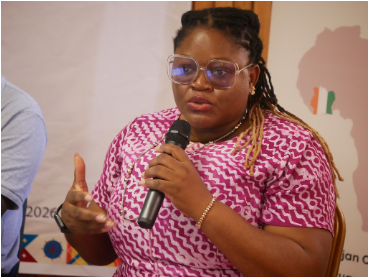 Osasumwen Edobor (2025 APDD Doctoral Proposal Fellow) from Baze University, Nigeria, submitted that the question of AI use sits at the conjunction between transparency and ingenuity. Arguing that since AI was so new, it would be impossible for African scholars to have all the answers on how it should be effectively used for research. She admitted that while African ownership was important, AI was helpful in carrying out mundane tasks.
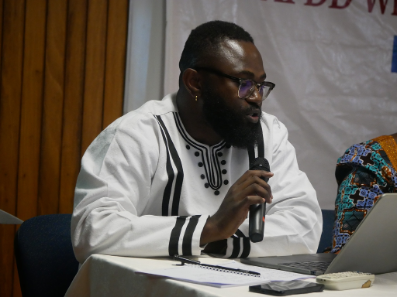 Izu Sichinga (IRF 2025) from the University of Cape Town, South Africa, emphasized the importance of accessibility and integrity when using AI. He illustrated his position by showing how the University of Cape Town seeks to promote accessibility and integrity with AI use among students, including the provision of strict guidelines for its usage. He argued persuasively that one can navigate ethical AI use, without judging and ruling it out completely.
The panel discussion included a productive interactive Question-and-Answer session.
The workshop concluded with a closing ceremony, during which Dr. Cyril Obi expressed gratitude to all attendees and participants, and appreciated a workshop that, once again, fostered meaningful connections on the African continent. Certificates were presented to all participants, by one of the guests of honor, Madame Malékah MOURAD-CONDE, the Director General of Côte d’Ivoire Tourisme (Ivory Coast Tourism Board). We also briefly interviewed a fellow, Aphiwe Mhlangulana (Research 2026), on her research project, “Black African Women Journalists and Bloggers Experiences of technology-facilitated gender-based violence.”
Afterward, we also enjoyed a discussion with Osasumwen Edobor (Proposal 2026) on how the APDD workshop has ultimately impacted her academic career and personal life.
The APDD program would like to thank all of the fellows, mentors, keynote lecturers, guests of honor, and members of CERAP for their participation, enthusiasm, support, and commitment to the program.
The APDD program is funded by Carnegie Corporation of New York.